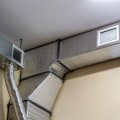
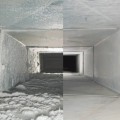
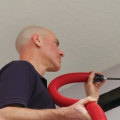
Don't take that fresh-after-the-rain feeling at face value. If you're the person in your house who decides when the windows go up, you deserve the full picture of what rain clears and what it leaves behind, outside and inside your home. Regular duct cleaning removes accumulated dust and debris from your HVAC ductwork that rain can't wash away.
TL;DR Quick Answers
Air Quality Wisconsin
Wisconsin’s air is usually good, and the state meets federal standards for every major pollutant except ozone, which still runs high along the Lake Michigan shoreline. Canadian wildfire smoke drives most of the worst summer days. Rain clears dust and pollen fast but does little for smoke or ozone, so check live readings.
Lakeshore ozone: Kenosha up to Door County sees the state’s highest ozone on hot, sunny days, when lake breezes push it onshore.
Wildfire smoke: Statewide advisories reached Unhealthy levels several times in summer 2025, mostly from fine PM2.5 particles.
After a storm: Your outdoor AQI can drop while indoor humidity climbs. Keep it between 30 and 50 percent to stop mold before it starts.
Inside your home: Outdoor pollution gets in through gaps and your HVAC system. Check the live AQI before opening windows, and swap a loaded filter after smoke days.
Top Takeaways
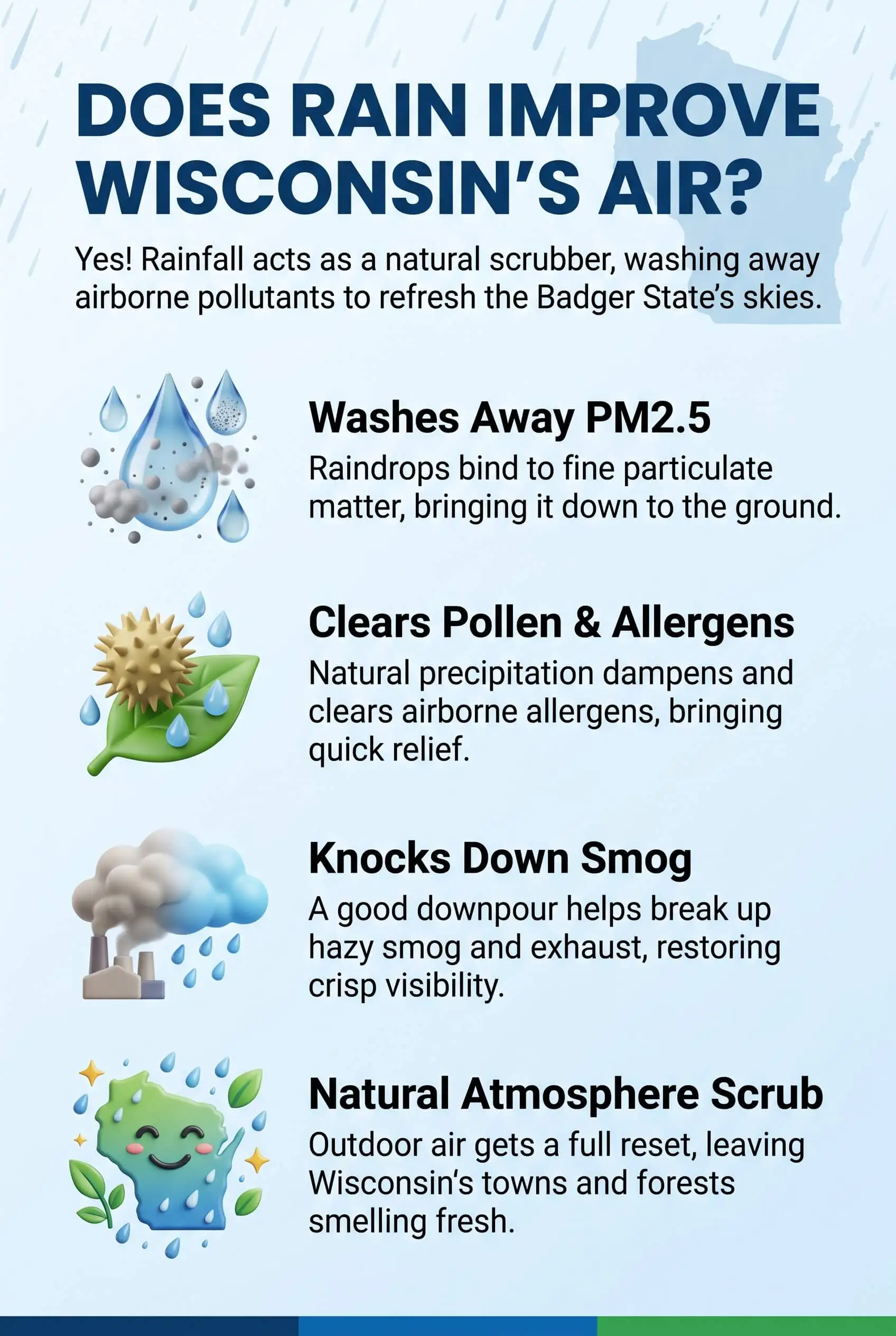
Rain helps, but unevenly. It clears coarse dust and pollen fast and removes only part of the fine PM2.5.
Steady rain wins. A long, heavy rain cleans far more than a quick shower.
Ozone stays put. Sunlight and lake breezes drive shoreline ozone, and rainfall barely changes it.
Storms can backfire. Thunderstorms in pollen season can spike allergy and asthma symptoms.
The inside counts too. Keep indoor humidity between 30 and 50 percent after wet weather.
How Rain Pulls Pollution Out of the Air
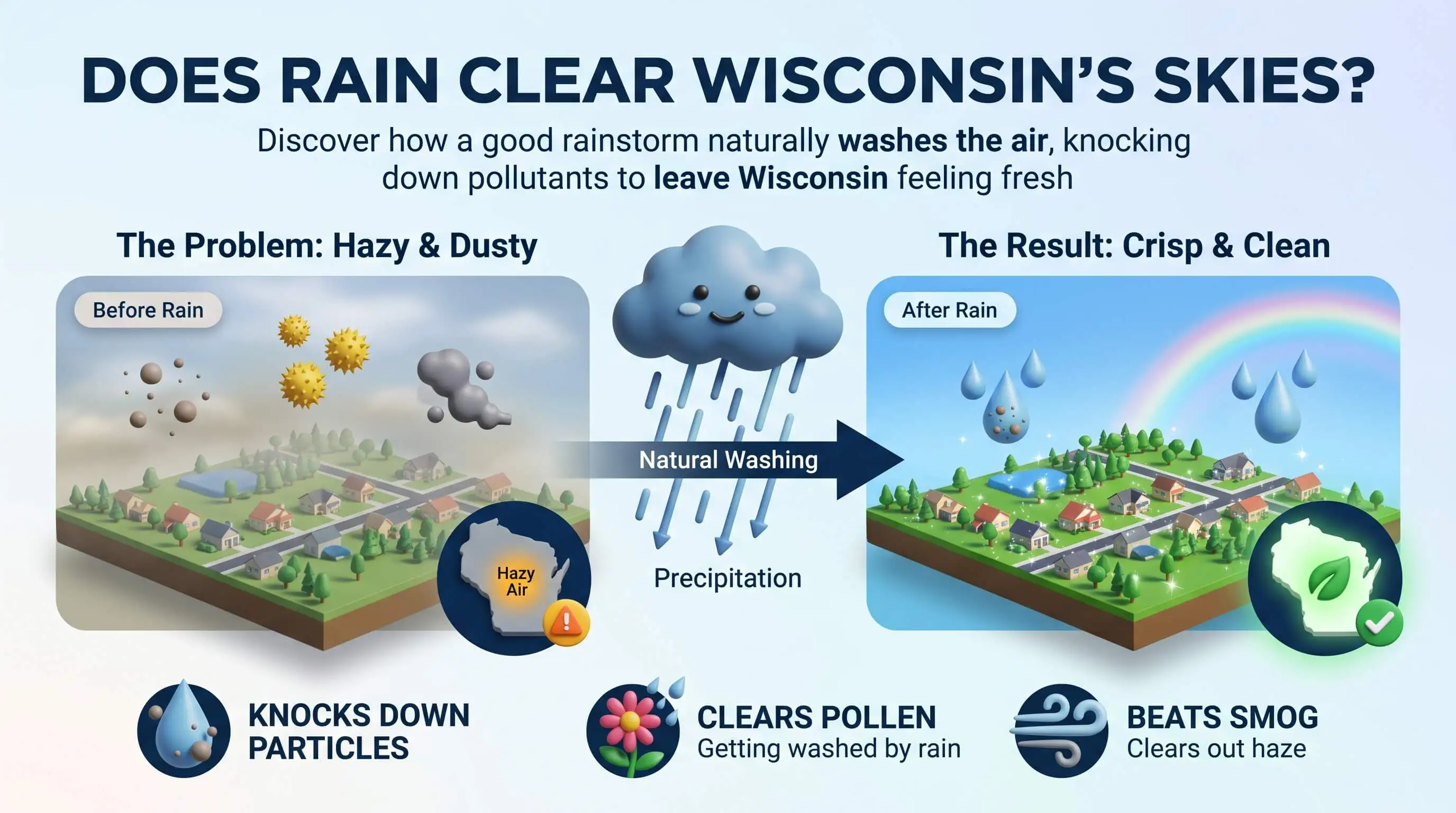
Most of the cleaning happens through washouts. Falling raindrops bump into particles hanging below the cloud and drag them down to the ground. This process can temporarily improve air quality Wisconsin experiences during rainy weather. Atmospheric scientists call this below-cloud scavenging, and particle size decides almost everything about how well it works.
Coarse particles clear fast. Dust, pollen and road grit make big targets, and rain knocks most of them out within the first hour.
Fine particles mostly slip through. Light and moderate rain barely touch particles between 0.1 and 1 micron, the size range where a lot of smoke and exhaust haze lives.
Heavier rain does more. Researchers tracking seven years of data at a rural monitoring site found that washout cleared roughly 10 to 40 percent of PM2.5, and the harder it rained, the more it removed.
Light Drizzle vs. Steady Rain
A ten-minute sprinkle might ground some pollen and leave the PM2.5 number on your Air Quality Index (AQI) reading exactly where it was. Steady rain gets more time and more drops. A slow, all-day soaker beats a quick burst almost every time.
Why Rain Affects Air Quality in Wisconsin Differently
Wisconsin's humid continental climate puts its wettest stretch in early summer, and June averages a little over four inches of rain statewide. That timing is unlucky. June through August is also peak season for ozone and wildfire smoke, the two pollutants rain handles worst.
Ozone Along the Lake Michigan Shoreline
You can't rinse ozone out of the sky, because it isn't a particle. It forms when emissions from cars, power plants and industry react in sunlight. Storm clouds slow that reaction for a few hours, and that's about all the help rain gives.
Wisconsin's ozone also clusters in one place. Lake breezes push ozone that formed over Lake Michigan back onto shore, and researchers studying the Kenosha shoreline caught at least one lake breeze on every day of their field campaign. That pattern explains why lakeshore counties from Kenosha up to Door County have fought to meet federal ozone standards while towns a few miles inland often breathe cleaner air.
Canadian Wildfire Smoke
Wildfire smoke is mostly fine PM2.5, squarely in the size range rain struggles with. Wisconsin dealt with repeated statewide smoke advisories in the summer of 2025, and a passing shower rarely cleared one on its own. When a storm does bring relief, give most of the credit to the wind shift behind the front.
Pollen and Thunderstorm Asthma
A gentle rain is good news for allergies because it pins pollen to the ground. Thunderstorms can do the opposite. Strong downdrafts lift pollen into the storm, moisture bursts the grains into tiny fragments, and gusts push those fragments down to street level just before the rain arrives. During grass and tree pollen season, that sequence can set off asthma symptoms in people who usually only fight hay fever.
What Rain Means for the Air Inside Your Home
Here's something that might surprise you. Your outdoor AQI can improve after a storm while the air inside your house gets worse, because heavy rain raises humidity and can push moisture into basements, crawlspaces and the duct runs that feed every room.
The EPA recommends keeping indoor humidity below 60 percent, ideally between 30 and 50 percent, and drying anything that gets wet within 24 to 48 hours so mold can't take hold. Mold and dust mites both thrive above that range. Your HVAC system will circulate whatever is growing in a damp return duct or on a neglected filter. A duct sealing service can help close leaks that allow humid air to enter your ductwork, reducing the risk of moisture buildup.
How to Use Rainy Days to Breathe Easier at Home
Check the numbers before you open the windows. Clear skies can hide high PM2.5 or ozone, so pull up a live Wisconsin air quality map and read the actual number for your area.
Air out after steady rain, and stay shut during thunderstorms. Once the AQI and pollen counts both drop, a post-rain breeze is one of the easiest ways to flush stale indoor air. In pollen season, keep the windows closed until storms pass.
Watch your humidity. A basic hygrometer costs less than a pizza. If it reads above 50 percent after a wet stretch, run a dehumidifier or your air conditioner until the number comes back down.
Check your HVAC filter after smoke or heavy pollen. A loaded filter chokes airflow and stops catching what it should. If your system can handle one, a MERV 11 filter captures more fine particles through smoke season.
"In my experience, the indoor air complaints that spike after a wet Wisconsin week have very little to do with the outdoor AQI. Rain drives basement humidity up, the furnace or air handler pulls that damp air across the filter and through the return ducts, and that's when musty odors and allergy flare-ups start, even on days the AQI map shows green."
7 Essential Resources
1. Learn What the AQI Numbers Mean: National Weather Service
The National Weather Service breaks the Air Quality Index down in plain language, covering the five pollutants it tracks and why ozone and particles cause the most health trouble.
Source: https://www.weather.gov/safety/airquality-aqindex
2. Follow Statewide Conditions: Wisconsin DNR Air Quality Program
Wisconsin's air quality hub for monitoring data, forecasts and wildfire smoke guidance. Sign up there for email or text advisories.
Source: https://dnr.wisconsin.gov/topic/AirQuality
3. Keep Post-Storm Moisture in Check: EPA Guide to Mold, Moisture and Your Home
This is where the 30 to 50 percent humidity target and the 24 to 48 hour drying window come from.
Source: https://www.epa.gov/mold/brief-guide-mold-moisture-and-your-home
4. Understand Smoke Exposure: CDC on How Wildfire Smoke Affects Your Body
The CDC explains who smoke hits hardest and links to steps for protecting yourself before, during and after a smoke event.
Source: https://www.cdc.gov/wildfires/risk-factors/index.html
5. See How Your County Grades: American Lung Association State of the Air
Annual report cards for ozone and particle pollution by county and metro area. Look up your county to see whether your air is trending better or worse.
Source: https://www.lung.org/research/sota
6. Dig Into Storm-Triggered Symptoms: Thunderstorm Allergy and Asthma Review
A peer-reviewed look at how storms concentrate and rupture pollen, and which people are most likely to react.
Source: https://pubmed.ncbi.nlm.nih.gov/35003735/
7. Pick the Right Dehumidifier: ENERGY STAR
Sizing, drainage and efficiency guidance for portable and whole-home units, plus simple fixes that cut humidity at the source.
Source: https://www.energystar.gov/products/dehumidifiers
3 Statistics
1. Rain Washout Removed About 10 to 40 Percent of PM2.5
Researchers analyzed seven years of minute-by-minute data from a rural monitoring site and found that below-cloud washout cleared roughly 10 to 40 percent of fine particles. The heavier the rain, the bigger the effect.
What it means for Wisconsin: A good soaking makes a noticeable dent in particle pollution, yet even the best case leaves most fine particles in the air.
Source: https://agris.fao.org/search/fr/records/65dffaff63b8185d9cb056ba
2. Rain Barely Touches Particles Between 0.1 and 1 Micron
A modeling study built on observed particle sizes found that light and moderate rain removes almost nothing in this range, while it clears coarse particles within a fraction of an hour.
What it means for Wisconsin: Smoke and exhaust particles fall right into this range. That's why a light rain rarely clears a smoky Wisconsin sky.
Source: https://acp.copernicus.org/articles/3/131/2003/
3. A Lake Breeze Showed Up Every Day of a Shoreline Ozone Study
During the WiscoDISCO field campaign on the Kenosha shoreline, researchers recorded at least one lake breeze every day and linked the shoreline's air quality to Chicago-area emissions mixing with lake weather.
What it means for Wisconsin: Sunlight and wind patterns drive lakeshore ozone, and a rainstorm won't wash it out.
Research shows that rain can remove 10 to 40 percent of fine particle pollution, but smaller smoke and exhaust particles often remain airborne. In Wisconsin, lake breezes and changing weather patterns can also contribute to ozone pollution that rain won't wash away. A pleated furnace filter can help capture airborne particles indoors, providing added protection when outdoor air quality remains poor after a storm.
Final Thoughts and Opinion
My honest opinion? Think of rain as a rinse and keep your expectations there. It does great work on dust and pollen and a partial job on fine particles, and it does next to nothing for ozone along the lakeshore. People who treat every storm as an all-clear end up airing out the house into a smoky afternoon or a pollen burst.
So build one habit and stick with it. Let the live reading decide when the windows open, and after a wet week, give your indoor humidity the same attention you give the forecast. A 30x30x1 air filter can capture airborne particles as air moves through your HVAC system, adding another layer of protection for your family's indoor air. Those two numbers will tell you more about the air your family breathes than the color of the sky ever will.
Frequently Asked Questions
Does Rain Clean the Air in Wisconsin?
Partly. Rain clears coarse particles like dust and pollen within about an hour, and a heavier, longer rain can lower fine particle levels by roughly 10 to 40 percent. It does little for ozone or the smallest smoke particles, so confirm with a live AQI reading before you open up the house.
Is Air Quality Better or Worse After a Thunderstorm?
Usually better once the rain passes, though the front edge of a storm can hit allergy sufferers hard. Downdrafts and moisture break pollen into fragments small enough to reach deep into the lungs, which is why storms in pollen season can trigger asthma symptoms.
Does Rain Clear Wildfire Smoke?
Only a little. Smoke is mostly fine PM2.5, and raindrops catch those particles poorly. Relief usually arrives with a wind shift behind the front. Until readings drop, keep your windows closed, consider top air filters to help capture fine smoke particles indoors, and follow Wisconsin DNR advisories.
Does Rain Lower Ozone Along Lake Michigan?
Not directly. Ozone forms when emissions react in sunlight, so cloudy, rainy days slow it down, but rain can't wash it out. Shoreline communities see more ozone because lake breezes carry it onshore on sunny days.
Should I Open My Windows After It Rains?
Often, yes, as long as the AQI and pollen counts are low. Check a live map first, keep the windows shut while a pollen-season thunderstorm passes, and watch your indoor humidity so you don't trade stale air for damp air.
Breathe Easier After Every Wisconsin Storm
Rain can clean up Wisconsin's air, and the reading on your local map plus the humidity inside your home will tell you whether it actually did. Indoor air quality testing can also help identify pollutants that rain doesn't remove. Check both after the next storm, keep a clean filter in place, and you'll know exactly when it's time to open the windows.